
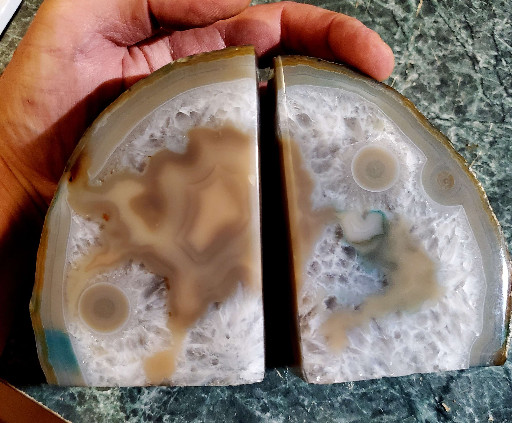
Polished agate geode bookends with natural banding and druzy formations
History
Agate is a variety of chalcedony quartz that forms in volcanic and metamorphic rocks through the slow deposition of silica from groundwater. These specimens likely originated from regions known for agate deposits, where geological conditions over millions of years created the distinctive banding patterns and crystalline druzy pockets visible in the stone. The white and cream banding with translucent areas and sparkling druzy crystals are characteristic of high-quality agate formations. Agate bookends and decorative slices have been prized since the Victorian era and remain popular among mineral collectors, interior designers, and those interested in natural home decor. The appeal lies in the unique patterns found in each piece—no two agates are identical—combined with the mesmerizing play of light through translucent bands and the sparkle of natural crystal formations. Collectors and enthusiasts of minerals, geology specimens, and natural art appreciate these pieces for their aesthetic beauty, geological significance, and the sense of bringing Earth's ancient processes into living spaces.