
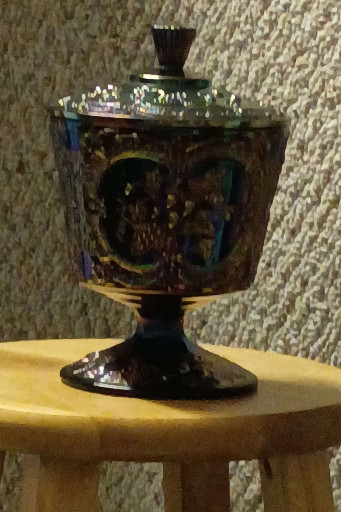
Carnival glass covered compote with grape and cable pattern by Fenton
History
Carnival glass emerged in the early 1900s as an affordable alternative to expensive Tiffany iridescent glass, produced primarily by American manufacturers like Fenton, Northwood, and Imperial. The distinctive iridescent finish was achieved by spraying metallic salts on hot glass, creating the rainbow-like sheen that gives carnival glass its name. The Grape and Cable pattern, featuring embossed grape clusters and vine motifs, became one of the most popular and enduring designs in carnival glass production. This type of covered compote appeals to carnival glass collectors, vintage glassware enthusiasts, and decorative arts collectors who appreciate early 20th-century American pressed glass. The purple (amethyst) carnival glass is particularly sought after for its rich color and iridescent properties, making it a desirable display piece for those interested in Art Nouveau-era decorative objects and American glass manufacturing history.
Origin
Williamstown, West Virginia, United States
Maker
Fenton Art Glass Company
Time period
circa 1970-1990