
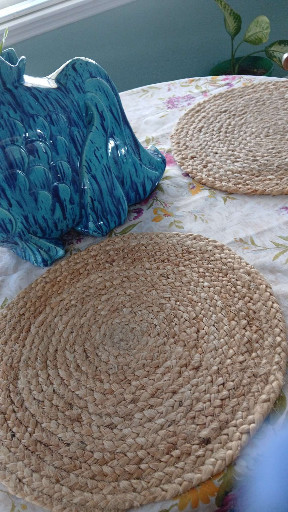
Handwoven natural fiber round placemats, likely water hyacinth or jute
Selling Price
$20
History
Handwoven natural fiber placemats have been used for centuries across various cultures, particularly in Southeast Asia, India, and coastal regions where materials like water hyacinth, jute, and seagrass grow abundantly. These eco-friendly table accessories gained popularity in Western markets during the late 20th century as part of the natural and bohemian home décor movements. The circular braided design reflects traditional weaving techniques passed down through generations of artisans. These placemats appeal to environmentally conscious consumers and those who appreciate handcrafted, sustainable home goods. The natural aesthetic fits perfectly with bohemian, coastal, farmhouse, and minimalist interior design styles. Collectors of artisan crafts and supporters of fair-trade products value these items for their authentic handmade quality and the cultural heritage they represent. The warm, organic texture adds a welcoming touch to any dining table while supporting traditional craftsmanship.
Origin
Southeast Asia or India
Time period
Contemporary, 21st century