
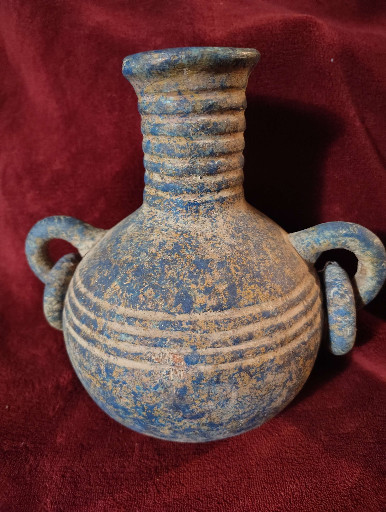
Ceramic two-handled amphora with blue glaze and ribbed decoration, Near Eastern or Amlash style

Selling Price
$400
History
This vessel exhibits characteristics associated with ancient Near Eastern pottery, particularly the Amlash culture of northern Iran (circa 1000–800 BCE). Such amphorae were used for storing liquids like wine, oil, or water, and were often placed in tombs as grave goods. The ribbed decoration and twin handles are typical features of utilitarian vessels from this period. Vessels of this type are highly valued by collectors of ancient Near Eastern antiquities and archaeological artifacts for their historical significance and connection to early civilizations. They appeal to museums, academic institutions, and private collectors interested in ancient pottery, Persian history, and the material culture of pre-Islamic Iran. The blue glaze and distinctive form make these pieces particularly attractive as decorative objects that bridge ancient craftsmanship with aesthetic appeal.
Origin
Northern Iran (Amlash region)
Time period
circa 1000–800 BCE