
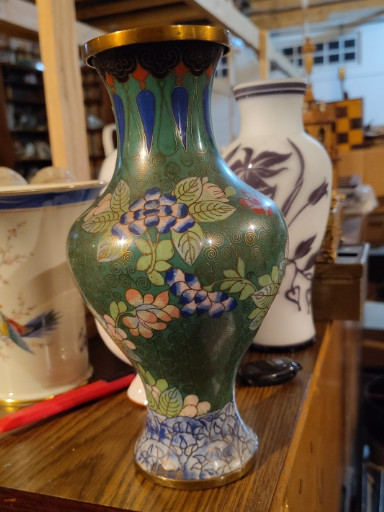
Cloisonné enamel vase with floral decoration on green ground

Selling Price
$80
History
Cloisonné is an ancient enameling technique that reached its artistic peak in China during the Ming and Qing dynasties, though production continued well into the 20th century. The technique involves creating compartments (cloisons) with thin metal wires on a metal base, then filling these cells with colored enamel paste and firing the piece multiple times to achieve a smooth, glossy finish. This particular vase features a classic green ground with floral motifs including chrysanthemums and leaves, a popular decorative theme symbolizing longevity and nobility in Chinese art. Cloisonné pieces like this vase appeal to collectors of Asian decorative arts, antique enamelware enthusiasts, and those interested in traditional Chinese craftsmanship. The intricate handwork, vibrant colors, and cultural symbolism make these pieces highly valued both as decorative objects and as examples of skilled metalwork. Collectors particularly appreciate pieces with good enamel condition, clear designs, and traditional motifs, as they represent an important chapter in Chinese decorative arts history.
Origin
China
Time period
Late 19th to early 20th century