
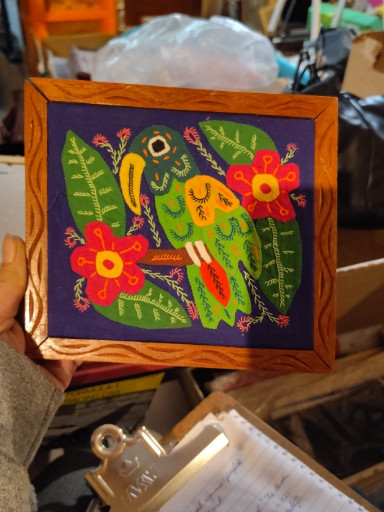
Hand-stitched textile mola depicting a parrot with flowers

Selling Price
$55
History
Molas are traditional textile art pieces created by the Kuna people of Panama and Colombia, typically made using reverse appliqué techniques with multiple layers of brightly colored fabric. This art form became prominent in the mid-19th century and represents an important cultural tradition, with designs often featuring animals, birds, and geometric patterns that hold symbolic meaning within Kuna society. Mola textiles are highly valued by folk art collectors, textile enthusiasts, and those interested in indigenous Central American crafts for their vibrant colors, intricate handwork, and cultural significance. These pieces appeal to collectors of ethnic textiles and Latin American folk art, who appreciate both the technical skill required to create the layered appliqué work and the cultural heritage they represent.
Origin
Panama
Maker
Kuna artisan
Time period
Late 20th century