
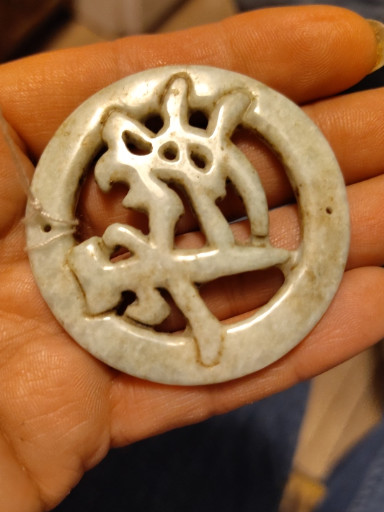
Jade circular pendant with openwork dragon and phoenix design

Selling Price
$300
History
This type of carved jade pendant originates from Chinese artistic traditions, where jade has been revered for thousands of years as a symbol of virtue, purity, and protection. The circular form with openwork carving represents traditional Chinese motifs, often featuring dragons and phoenixes which symbolize power, prosperity, and harmony. Such pendants were commonly worn as amulets or decorative jewelry pieces, particularly during the late Qing Dynasty through the early 20th century. These jade pendants are highly valued by collectors of Asian art and antiques, as well as enthusiasts of traditional Chinese jewelry and cultural artifacts. The intricate openwork carving demonstrates skilled craftsmanship and connects the wearer to centuries of Chinese jade carving tradition. Collectors appreciate these pieces for their historical significance, artistic merit, and the cultural symbolism embedded in the dragon and phoenix imagery, making them desirable additions to collections of Chinese decorative arts.
Origin
China
Time period
Late 19th to early 20th century