
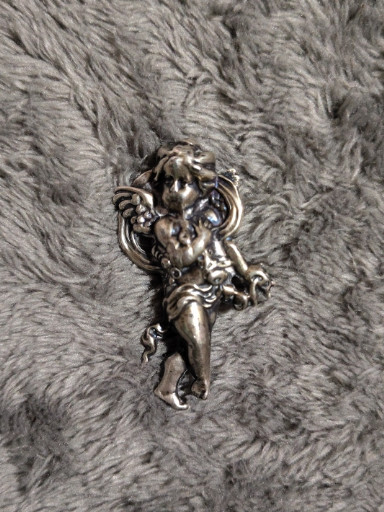
Sterling silver repoussé brooch depicting a cherub or putti figure

History
This brooch represents the enduring popularity of cherub motifs in decorative arts, particularly during the Art Nouveau and mid-20th century periods. Repoussé is a metalworking technique where the design is hammered from the reverse side to create a raised relief on the front, a method favored for creating dimensional figural jewelry. Such pieces were often worn as statement brooches on lapels, scarves, or hats, reflecting romantic and classical themes that appealed to Victorian and Edwardian sensibilities. Cherub and putti brooches are highly sought after by collectors of vintage sterling silver jewelry, Art Nouveau enthusiasts, and those who appreciate figural pins with mythological or romantic themes. These pieces are valued for their craftsmanship, the skill required in repoussé work, and their charming representation of classical art in wearable form. They remain popular among vintage jewelry collectors and are often displayed in curated collections or worn as conversation pieces at antique shows and estate sales.
Origin
United States
Time period
circa 1940–1960