
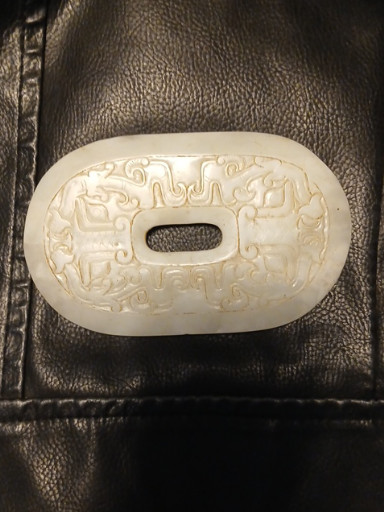
White jade plaque or belt buckle with carved dragon and cloud motifs

History
This jade plaque represents a traditional Chinese ornamental form that dates back to ancient dynasties, particularly the Han and Zhou periods. Such plaques were often used as belt buckles, pendants, or ceremonial ornaments, featuring intricate carvings of auspicious symbols like dragons and clouds. The dragon motif symbolizes power, strength, and good fortune in Chinese culture, while the cloud patterns represent heavenly blessings and prosperity. These jade ornaments were highly valued by the Chinese aristocracy and scholar-officials, who wore them as status symbols and talismans. Jade carvings of this type are highly prized by collectors of Chinese antiquities, Asian art enthusiasts, and jade specialists worldwide. The appeal lies in the combination of exceptional craftsmanship, cultural significance, and the inherent beauty of nephrite jade, which has been treasured in Chinese culture for over 5,000 years. Museums, private collectors, and auction houses specializing in Asian art actively seek authentic examples of carved jade ornaments for their historical importance and artistic merit. The translucent white jade, intricate relief carving, and traditional iconography make such pieces valuable additions to collections focused on Chinese decorative arts and ancient craftsmanship.
Origin
China
Time period
Han Dynasty, circa 206 BCE–220 CE