
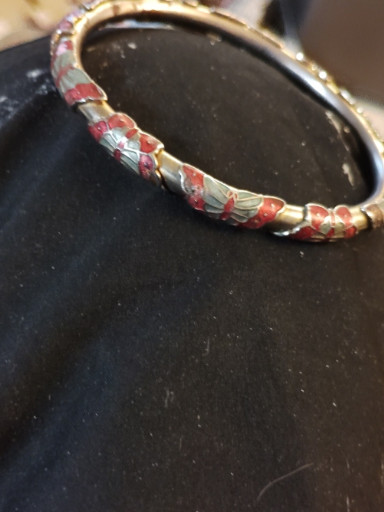
Cloisonné enamel bangle bracelet with floral and butterfly motif
Selling Price
$40
History
Cloisonné is an ancient enameling technique that originated in the Near East and was perfected by Chinese artisans during the Ming Dynasty (1368-1644). The technique involves creating compartments (cloisons) with metal wire on a metal base, then filling them with colored enamel paste and firing at high temperatures. This particular bracelet appears to be a vintage piece from the mid-to-late 20th century, featuring a delicate floral pattern with red flowers and green leaves on a light background, demonstrating the intricate craftsmanship characteristic of cloisonné work. Cloisonné jewelry appeals to collectors of vintage costume jewelry, Asian decorative arts enthusiasts, and those who appreciate traditional handicraft techniques. These pieces are valued for their vibrant colors, intricate designs, and the labor-intensive process required to create them. The floral and butterfly motifs are particularly popular among collectors who appreciate nature-inspired vintage jewelry, and such bracelets serve as wearable art that bridges traditional craftsmanship with everyday fashion. The hinged bangle design makes it both practical and elegant, suitable for both casual wear and special occasions.
Origin
China
Time period
Mid to Late 20th century