
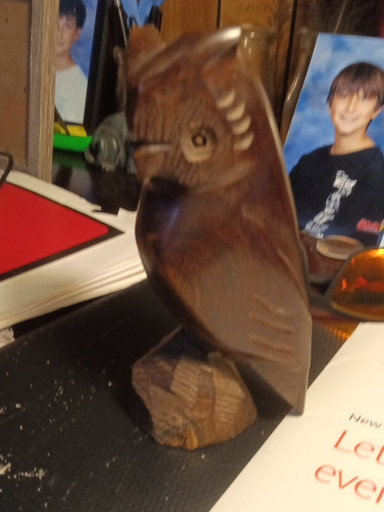
Hand-carved wooden owl sculpture

History
Hand-carved wooden owl sculptures have been crafted for centuries, with examples dating back to folk art traditions in Europe and the Americas. This particular style became especially popular during the mid-20th century, when artisans in Mexico and other Latin American countries developed a thriving tradition of animal carvings from dense tropical hardwoods like ironwood or teak. The owl motif held deep cultural significance, symbolizing wisdom, protection, and mystery across many civilizations, making these sculptures cherished decorative items from the 1950s through the 1980s. These charming folk art pieces appeal strongly to collectors of mid-century decorative arts, vintage home décor enthusiasts, and those passionate about Latin American folk art traditions. The hand-carved nature of each piece, combined with the natural beauty of the wood grain and the owl's timeless symbolic meaning, makes these sculptures highly valued by collectors who appreciate authentic handcrafted artisan work and rustic, organic home accessories. The tactile quality and warm patina of aged wood adds to their enduring appeal among vintage décor collectors.
Origin
Mexico
Time period
circa 1950–1980