
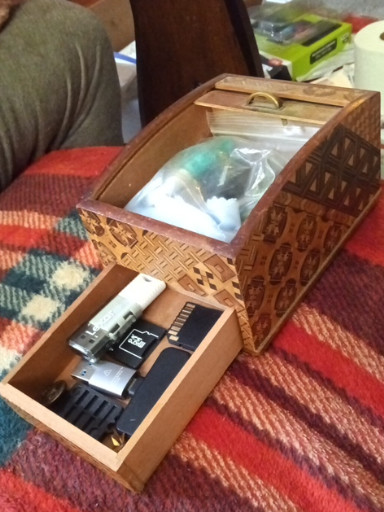
Wooden marquetry puzzle box with sliding drawer mechanism, Japanese Yosegi-Zaiku style

History
This is a Japanese Yosegi-Zaiku puzzle box, a traditional craft originating from the Hakone region of Japan during the Edo period (1603-1868). The technique involves creating intricate geometric patterns using different types of wood veneers, assembled without stains or dyes. These boxes became particularly popular during the early to mid-20th century, especially during the Showa period (1926-1989), when they were produced both for domestic use and export markets, including pieces marked 'Occupied Japan' (1945-1952). Yosegi puzzle boxes are highly valued by collectors of Japanese folk art, woodworking enthusiasts, and puzzle collectors worldwide. The appeal lies in the masterful craftsmanship, the mathematical precision of the sliding panel mechanisms, and the beautiful natural wood patterns that make each piece unique. These boxes represent a centuries-old tradition of Japanese woodworking excellence and continue to fascinate collectors who appreciate both the artistic beauty and the ingenious hidden compartment designs that require specific sequences of moves to open.
Origin
Hakone, Kanagawa Prefecture, Japan
Time period
Mid 20th century