
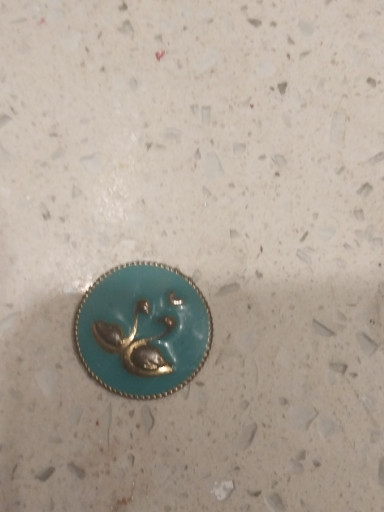
Guilloche enamel button or brooch with floral motif

History
Guilloche enamel work became highly popular in the late 19th and early 20th centuries, particularly during the Art Nouveau and Edwardian periods. This technique involves engraving intricate patterns onto metal, then applying translucent enamel over the design to create a shimmering, dimensional effect. The turquoise blue color and floral decoration were characteristic of decorative accessories from this era, often used on buttons, brooches, compacts, and vanity items. Such pieces were frequently produced by skilled artisans in France, England, and other European centers known for fine enamelwork. Guilloche enamel items are highly prized by collectors of vintage jewelry, sewing notions, and decorative arts for their exquisite craftsmanship and timeless beauty. The delicate technique and vibrant colors make these pieces particularly appealing to enthusiasts of Art Nouveau and Edwardian fashion accessories. Collectors value them not only for their aesthetic charm but also for their historical significance as examples of traditional enameling techniques that require exceptional skill and precision.
Origin
Europe
Time period
circa 1900–1930