
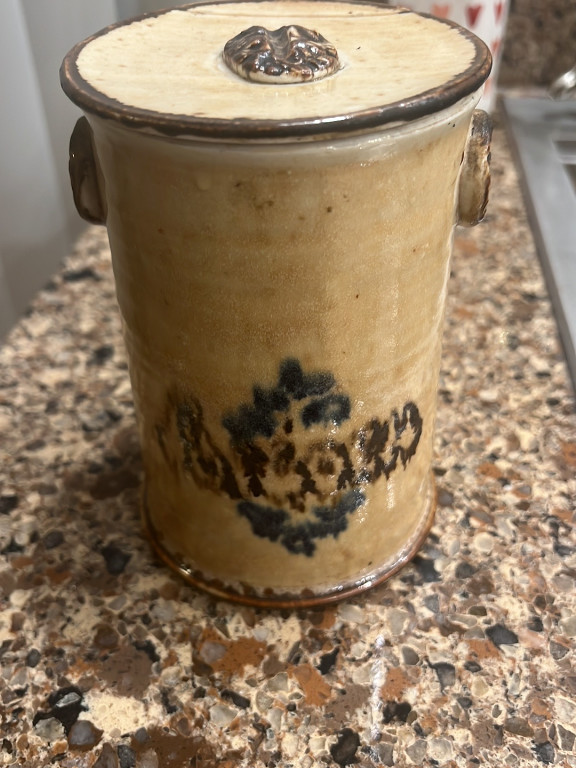
Stoneware crock with cobalt blue decoration and lion head handles, signed by maker

History
This stoneware crock dates to the 19th century, likely between 1850-1890, when salt-glazed stoneware was widely produced throughout the United States. The cobalt blue decoration represents the maker's mark or brand, which was typically applied by hand using cobalt oxide that turns deep blue during the firing process. The functional lion head handles were both decorative and practical, allowing the vessel to be easily moved when filled with preserved foods or other household goods. Stoneware crocks like this are highly valued by collectors of American folk art and antique pottery. The presence of a maker's mark significantly enhances its collectibility and historical importance, as it connects the piece to a specific pottery or manufacturer from the American stoneware tradition. Collectors particularly appreciate signed pieces as they provide provenance and authenticity, making them more desirable in the antiques market. These utilitarian vessels represent an important aspect of American domestic life and manufacturing history.
Origin
United States
Maker
Visible but partially illegible maker's mark in cobalt blue
Time period
Mid to Late 19th century (circa 1850-1890)