
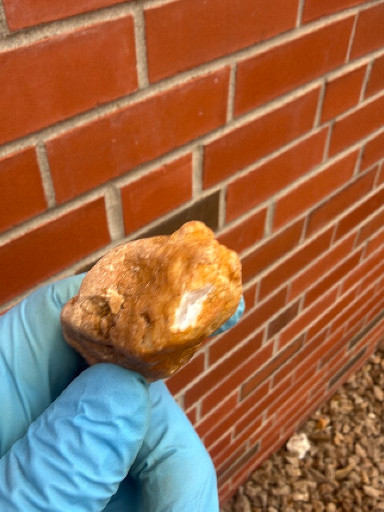
Raw amber specimen

History
Amber is fossilized tree resin that has been prized for thousands of years, dating back to ancient civilizations including the Greeks, Romans, and Baltic peoples who used it for jewelry, trade, and medicinal purposes. This organic gemstone forms over millions of years as resin from prehistoric trees hardens and fossilizes, often preserving ancient insects, plant matter, and air bubbles within. Amber specimens are highly valued by collectors of natural history, gemstone enthusiasts, paleontologists, and jewelry makers. The warm golden-orange color, organic origin, and potential for containing prehistoric inclusions make amber fascinating to those interested in Earth's ancient past. Raw amber pieces like this are sought after both for their aesthetic beauty and scientific significance, with collectors particularly drawn to specimens that may contain well-preserved inclusions or display exceptional color and clarity.
Origin
Baltic Region (likely Poland, Lithuania, or Russia)
Time period
25-50 million years old (Eocene to Oligocene epoch)