
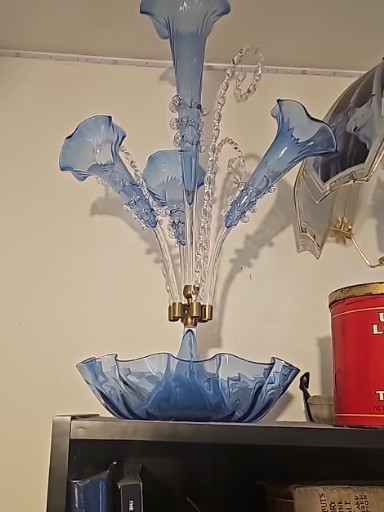
Blue opalescent glass epergne centerpiece with five fluted vases

History
Glass epergnes emerged as fashionable centerpieces during the Victorian era, particularly popular from the 1860s through the early 1900s. These ornamental pieces were designed to hold flowers, fruit, or sweets at formal dining tables and were prized for their elaborate designs and colorful glass work. Blue opalescent glass became especially desirable in the late 19th century, produced by renowned glassmakers in England, Bohemia, and later America. Epergnes appeal to collectors of Victorian decorative arts, antique glassware enthusiasts, and those who appreciate ornamental table centerpieces. The combination of delicate hand-blown trumpet vases, opalescent coloring, and the dramatic vertical presentation makes these pieces highly sought after by glass collectors and interior decorators seeking authentic period pieces. Such epergnes are valued for their craftsmanship, aesthetic beauty, and their representation of Victorian-era entertaining culture.
Origin
England or Bohemia
Time period
circa 1880–1920