
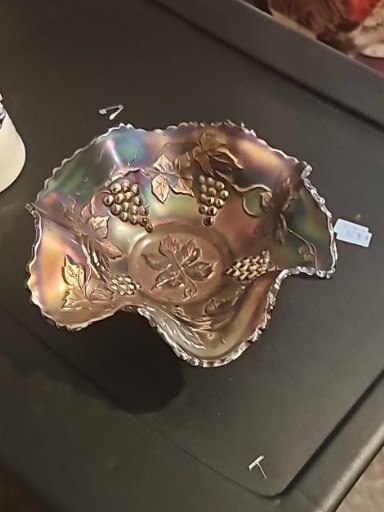
Carnival glass bowl with grape and leaf pattern

History
Carnival glass emerged in the early 1900s as an affordable alternative to expensive Tiffany iridescent glass. American manufacturers like Fenton, Northwood, and Imperial produced these colorful, iridescent pressed glass pieces that became popular premiums at carnivals and fairs, hence the name. The grape and leaf motif was among the most popular patterns, symbolizing abundance and prosperity in American decorative arts of the era. Carnival glass bowls remain highly collectible among glass enthusiasts and antique collectors who appreciate the craftsmanship and nostalgic charm of early 20th-century American glassware. The iridescent finish, created by spraying metallic salts on hot glass, produces stunning rainbow effects that make each piece unique. Collectors particularly value pieces with strong, even iridescence and well-defined patterns. These bowls appeal to both carnival glass specialists and general antique collectors who admire the artistry and historical significance of Depression-era American glass production.
Origin
United States
Time period
Early to Mid 20th century