
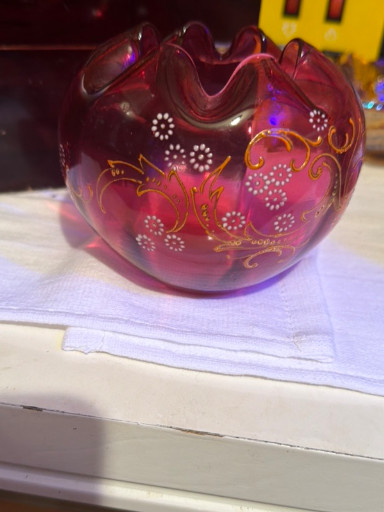
Cranberry glass rose bowl with hand-painted enamel floral decoration and gilt accents

Selling Price
$500
History
Cranberry glass rose bowls emerged during the Victorian era in the late 19th century, particularly popular in England, France, and Bohemia. These decorative vessels were crafted using gold chloride to achieve the distinctive pink-to-ruby color, then embellished with hand-painted enamel flowers and gilded scrollwork. The crimped rim and bulbous form were characteristic of the period's aesthetic preferences. Rose bowls served both functional and decorative purposes in Victorian and Edwardian homes, originally designed to hold potpourri or fresh rose petals to scent rooms. These pieces are highly sought after by collectors of Victorian glassware and decorative arts enthusiasts who appreciate the craftsmanship of hand-painted enamel work. The combination of cranberry glass with elaborate floral decoration represents the height of 19th-century glass artistry, making these bowls prized additions to antique glass collections and period home décor.
Origin
France or Bohemia
Time period
circa 1890-1920