
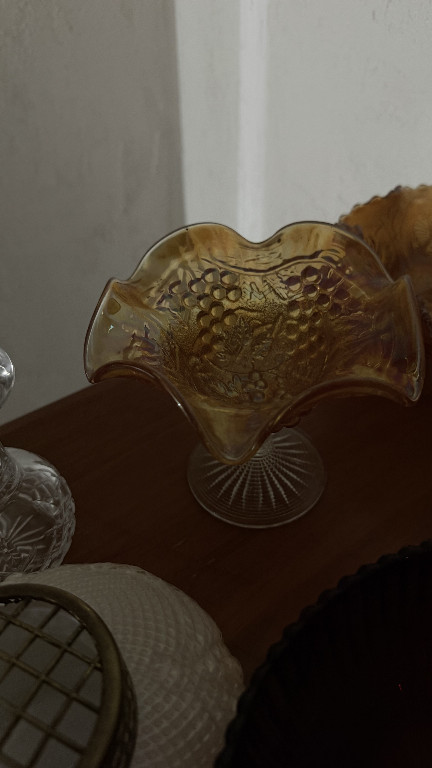
Marigold carnival glass compote with grape and leaf pattern

Selling Price
$25
History
Carnival glass was first produced in the early 1900s as an affordable alternative to expensive Tiffany iridescent glass. American manufacturers like Fenton, Northwood, and Indiana Glass created these pieces by spraying metallic salts onto pressed glass before firing, producing the distinctive iridescent sheen. The grape and leaf pattern was among the most popular motifs, reflecting the Art Nouveau fascination with natural forms. This particular style of ruffled-edge footed compote was commonly produced from the 1960s through the 1980s as part of the carnival glass revival. Carnival glass compotes remain highly collectible among Depression-era glass enthusiasts and vintage glassware collectors. The warm marigold color is particularly sought after, and these pieces are prized for their decorative appeal and nostalgic charm. They are popular with collectors of American pressed glass, vintage home decor enthusiasts, and those who appreciate mid-century decorative arts. The affordability and beauty of carnival glass make it an accessible entry point for new collectors while still holding value for serious glass collectors.
Origin
United States
Maker
Indiana Glass Company
Time period
circa 1960-1980