
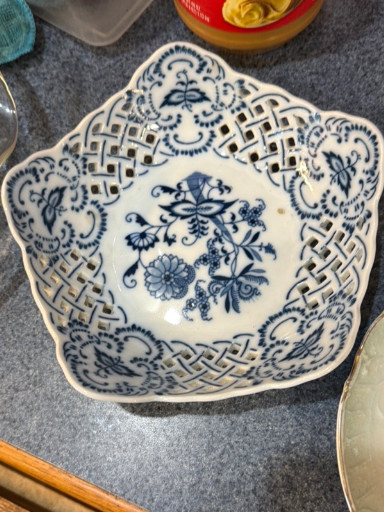
Porcelain reticulated bowl with 'Blue Onion' pattern

History
The Blue Onion pattern (Zwiebelmuster) originated at the Meissen porcelain factory in Germany around 1739, inspired by Chinese blue-and-white porcelain. The design actually depicts pomegranates, peaches, and asters rather than onions, but the German name stuck due to the stylized fruit shapes. This pattern became one of the most copied and enduring designs in European ceramics, produced by numerous factories across Europe and beyond for over 280 years. Blue Onion porcelain remains highly collectible among enthusiasts of traditional European ceramics and blue-and-white pottery. Collectors appreciate these pieces for their timeless aesthetic, intricate hand-painted or transfer-printed decoration, and connection to centuries of porcelain-making tradition. The reticulated (pierced) edges demonstrate skilled craftsmanship and add decorative appeal, making such bowls desirable for both display and functional use in traditional table settings.
Origin
Bohemia, Czech Republic
Maker
Zwiebelmuster Bohemia or similar Czech manufacturer
Time period
Mid to Late 20th century