
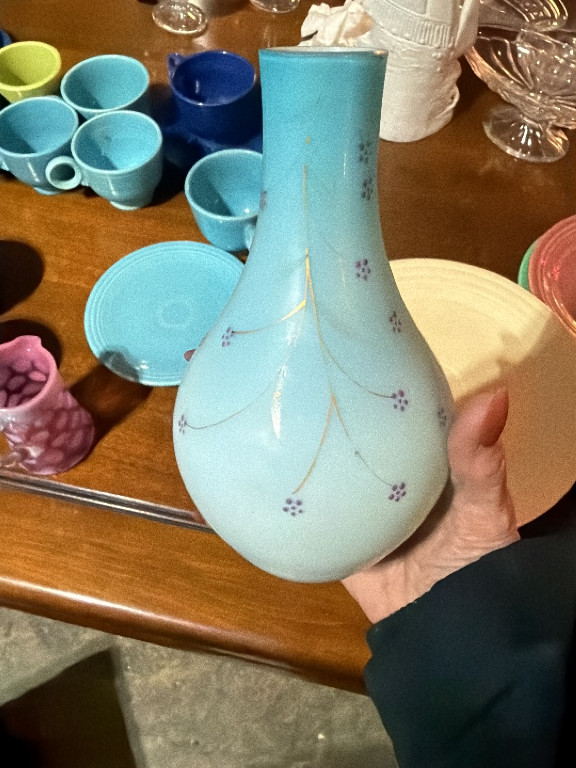
Satin glass vase with hand-painted floral decoration

Selling Price
$125
History
Satin glass, also known as mother-of-pearl glass or pearl satin glass, became highly popular during the late Victorian era from the 1880s through the early 1900s. This decorative glass was produced by treating the surface with acid to create a soft, matte finish that resembled satin fabric. The technique was perfected by glasshouses in England and America, with notable manufacturers including Mount Washington Glass Company, Phoenix Glass, and various Bohemian makers. The delicate hand-painted floral motifs were a hallmark of the period, often featuring roses, forget-me-nots, and other garden flowers in soft pastel colors. Satin glass vases appeal to collectors of Victorian decorative arts, antique glass enthusiasts, and those who appreciate the romantic aesthetic of the late 19th century. These pieces are valued for their delicate beauty, the skill required in their production, and their representation of Victorian taste and craftsmanship. Collectors particularly prize examples with well-preserved decoration and unusual color combinations, as these pieces capture the elegance and refinement of the Victorian parlor.
Origin
England or United States
Time period
circa 1880-1910