
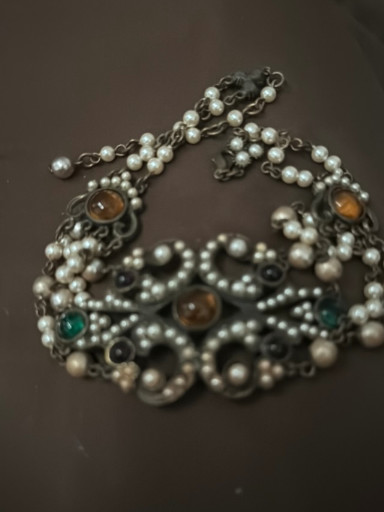
Austro-Hungarian silver bracelet with pearls, citrine, and enamel accents

History
This bracelet exemplifies the craftsmanship of Austro-Hungarian jewelry from the late 19th to early 20th century, a period when the empire's artisans were renowned for their intricate metalwork and use of semi-precious stones. The combination of silver, natural pearls, citrine cabochons, and enamel detailing reflects the Art Nouveau aesthetic that flourished during this era, emphasizing organic forms and decorative elegance. Such pieces were often worn by the European aristocracy and wealthy bourgeoisie as symbols of refined taste and social status. Austro-Hungarian jewelry remains highly sought after by collectors of antique and period jewelry, particularly those who appreciate the historical significance and artistic merit of Central European decorative arts. The intricate construction, use of natural materials, and distinctive design elements make these pieces valuable both as wearable art and as historical artifacts. Collectors specializing in Art Nouveau jewelry, Victorian-era accessories, and European antiques prize these bracelets for their craftsmanship, provenance, and the romantic aesthetic they embody.
Origin
Austro-Hungarian Empire (Central Europe)
Time period
circa 1890-1920