
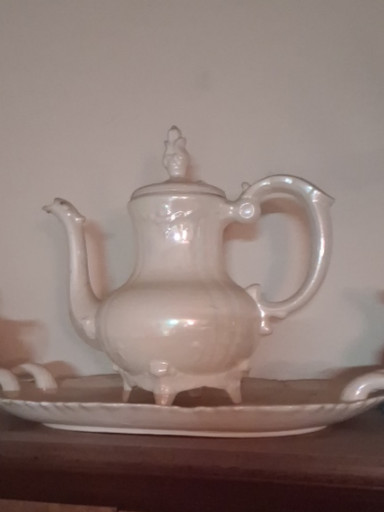
White ceramic lusterware teapot with iridescent finish and gold accents
History
Lusterware ceramics gained widespread popularity in the mid-20th century, particularly during the 1950s through 1970s, when pearlescent glazes and iridescent finishes became fashionable for tea services and decorative tableware. These pieces were often produced in Japan, Europe, and the United States as affordable yet elegant alternatives to fine porcelain, featuring mother-of-pearl effects achieved through metallic oxide glazes. The footed design and curved spout reflect the ornate aesthetic preferences of the era, when tea services were essential household items for entertaining guests. Lusterware teapots appeal to collectors of vintage tableware, mid-century ceramics enthusiasts, and those who appreciate the nostalgic charm of retro kitchen items. The iridescent finish and gold detailing make these pieces particularly attractive to decorators seeking statement pieces for display, while tea enthusiasts value them as functional vintage serving vessels. Such items are sought after in vintage home decor markets and among collectors who specialize in post-war domestic ceramics for their aesthetic beauty and historical connection to mid-century entertaining culture.
Time period
circa 1950-1970