
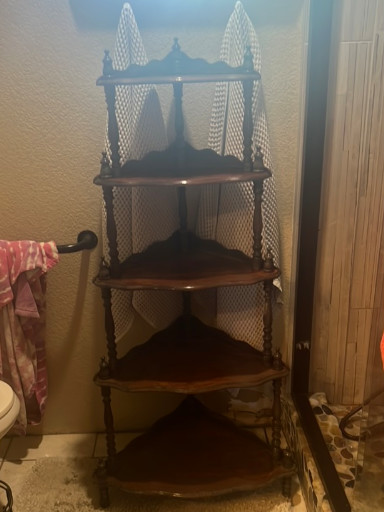
Victorian mahogany corner étagère with five graduated shelves and pierced fretwork gallery

History
Victorian corner étagères emerged during the mid-to-late 19th century as fashionable display furniture for showcasing decorative objects, china, and curiosities in the home. These pieces reflected the Victorian era's love of ornamentation and the growing middle-class desire to display wealth and taste through carefully arranged collections. The pierced fretwork galleries and turned spindles were characteristic of the Rococo Revival style popular during this period. These elegant corner shelves remain highly sought after by collectors of Victorian furniture and interior designers seeking authentic period pieces for traditional or eclectic spaces. Their compact footprint makes them particularly appealing for modern homes where space is at a premium, while their ornate detailing adds architectural interest and vertical display space. Antique furniture enthusiasts and dealers value well-preserved examples for their craftsmanship and historical significance as representations of Victorian domestic life and aesthetic sensibilities.
Origin
United States or United Kingdom
Time period
circa 1880–1910