
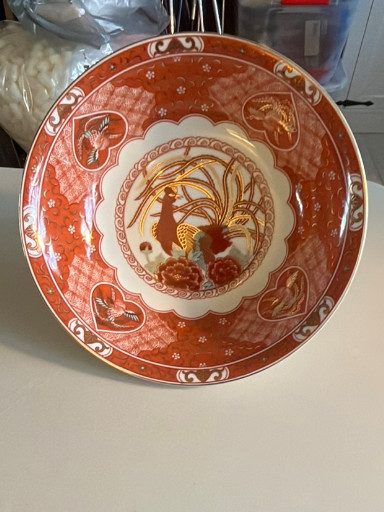
Porcelain bowl in Japanese Imari style featuring a phoenix motif with gold accents

Selling Price
$100
History
This bowl exemplifies the Japanese Imari ceramic tradition, which originated in the Arita region of Japan in the 17th century. Imari ware became famous for its distinctive red, blue, and gold color palette and was widely exported to Europe. The phoenix motif represents rebirth, immortality, and prosperity in East Asian symbolism, making it a popular decorative element in Japanese ceramics. This particular piece dates to the 1970s, a period when Japanese manufacturers produced high-quality decorative ceramics for both domestic and international markets. Imari-style porcelain remains highly sought after by collectors of Asian ceramics and decorative arts enthusiasts. The combination of traditional craftsmanship, symbolic imagery, and vibrant colors appeals to those who appreciate Japanese cultural heritage and fine porcelain work. These pieces are valued for their decorative beauty and their connection to centuries-old ceramic traditions, making them popular among collectors of Oriental antiques and those seeking elegant statement pieces for home décor.
Origin
Arita, Kyushu, Japan
Maker
Kyo Gama
Time period
circa 1970s