
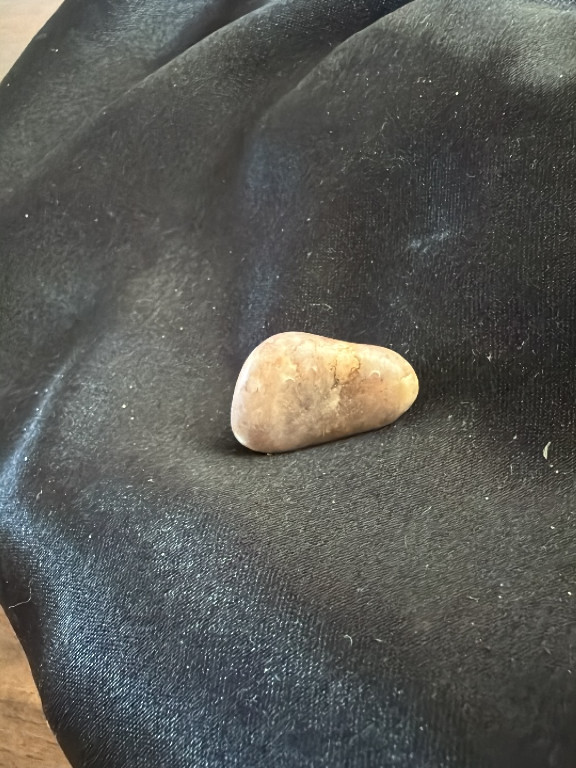
Polished stone, possibly a dinosaur gastrolith (stomach stone) or river-tumbled quartz pebble

Selling Price
$50
History
Gastroliths are smooth, polished stones swallowed by dinosaurs and other prehistoric animals to aid digestion by grinding food in their stomachs. These stones were tumbled and polished internally over time, creating their distinctive rounded, worn appearance. Authentic gastroliths are typically found in fossil beds dating from the Jurassic and Cretaceous periods, particularly in formations like the Morrison Formation and Hell Creek Formation in the western United States. Such specimens appeal to fossil collectors, paleontology enthusiasts, and natural history museums for their direct connection to prehistoric life. The smooth, tactile quality and the story behind each stone make them fascinating conversation pieces and educational tools. However, distinguishing genuine gastroliths from ordinary river-polished stones requires provenance documentation and geological context, as many naturally tumbled stones share similar characteristics.
Origin
Possibly Western United States (Montana, Wyoming, or similar fossil-bearing regions)
Time period
Jurassic to Cretaceous Period (if gastrolith, circa 150–66 million years ago)