
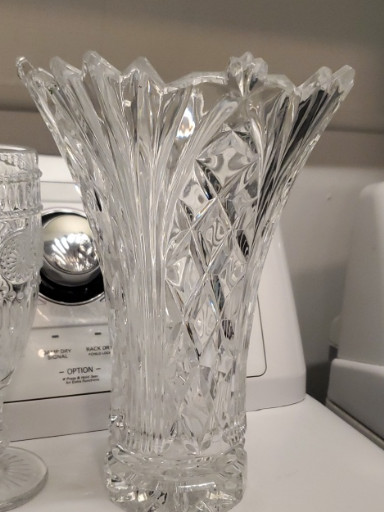
Lead crystal vase with scalloped rim and crosshatch cut pattern

History
This style of lead crystal vase became popular in the mid-to-late 20th century, particularly during the 1970s through 1990s, when cut crystal glassware was a staple of American and European home décor. Manufacturers like Gorham, Cristal D'Arques, and other American and European crystal companies produced these elegant pieces using traditional glass-cutting techniques, often incorporating geometric patterns such as crosshatch, diamond, and fan cuts. The scalloped or flared rim was a signature design element that added visual interest and sophistication to these decorative vessels. Such vases are highly valued by collectors of vintage glassware and crystal enthusiasts who appreciate the craftsmanship and timeless elegance of hand-cut or precision-cut lead crystal. These pieces remain popular in the secondary market for their decorative appeal, their ability to enhance floral arrangements, and their representation of a bygone era of formal home entertaining. Collectors often seek out specific patterns, makers, and sizes to complete their collections or to use as statement pieces in traditional or eclectic interiors.
Origin
United States or Europe
Time period
circa 1970–1990