
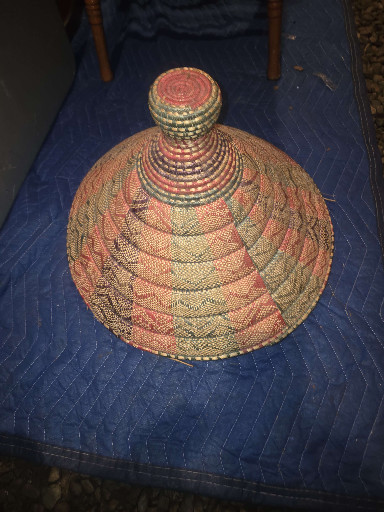
Hand-woven coiled grass ceremonial hat from the Harari or Fulani people of Ethiopia
History
This distinctive conical hat with a wide brim represents traditional ceremonial or festive headwear from the Horn of Africa, particularly associated with the Harari people of eastern Ethiopia or possibly Fulani communities. These hats were crafted using ancient coiling techniques, wrapping bundles of grass with dyed fibers to create geometric patterns in natural earth tones and vibrant colors. Such headpieces were worn during special occasions, festivals, and cultural ceremonies, serving both practical sun protection and symbolic cultural identity. These traditional African headpieces are highly sought after by collectors of ethnographic textiles, African art enthusiasts, and museums documenting indigenous craftsmanship. The appeal lies in their authentic handmade construction, cultural significance, and striking visual impact as display pieces. Interior designers and collectors of global folk art value these items for their unique sculptural form, natural materials, and the preservation of traditional weaving techniques that connect contemporary audiences to centuries-old African heritage and artisan traditions.
Origin
Harar, Ethiopia
Maker
Ethiopian artisan
Time period
Mid to late 20th century