
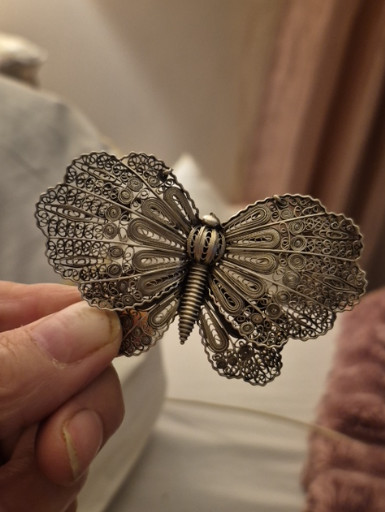
Silver filigree butterfly brooch

History
Silver filigree butterfly brooches became popular in the late 19th and early 20th centuries, particularly in European jewelry-making centers. The intricate wirework technique, known as filigree, was especially prevalent in German, Portuguese, and Italian silverwork, where artisans created delicate lace-like patterns by twisting and soldering fine silver threads. These brooches often featured naturalistic motifs like butterflies, flowers, and insects, reflecting the Victorian and Edwardian fascination with nature and romanticism. Silver filigree butterfly brooches are highly valued by vintage jewelry collectors, antique enthusiasts, and those who appreciate fine metalwork craftsmanship. The delicate artistry and labor-intensive technique make these pieces particularly appealing to collectors of Victorian and Edwardian jewelry, as well as those interested in European decorative arts. The butterfly motif symbolizes transformation and beauty, adding sentimental and aesthetic value that resonates with jewelry lovers and historians alike.
Origin
Germany
Time period
Late 19th to early 20th century