
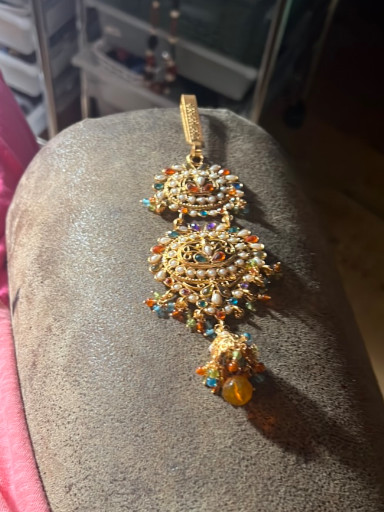
Gold-plated silver pendant (tikka or jhoomar) with multicolored gemstones and pearls, South Asian traditional jewelry

History
This type of ornate pendant represents traditional South Asian bridal and ceremonial jewelry, particularly popular in regions of India, Pakistan, and Central Asia from the late 19th through early 20th centuries. Such pieces were crafted using gilded silver as a base metal, adorned with semi-precious stones like turquoise, coral, and carnelian, along with seed pearls, creating the distinctive navratan (nine-gem) aesthetic. These pendants served as forehead ornaments (tikka) or chest ornaments, worn during weddings and important cultural celebrations. This style of jewelry appeals strongly to collectors of ethnic and antique jewelry, particularly those interested in South Asian cultural heritage and traditional craftsmanship. The intricate metalwork, colorful gemstone arrangement, and historical significance make such pieces highly valued by museums, cultural institutions, and private collectors who appreciate the artistry of traditional goldsmithing techniques. The piece represents an important example of regional jewelry-making traditions that combined precious materials with symbolic designs reflecting prosperity and celebration.
Origin
South Asia (India, Pakistan, or Uzbekistan/Bukhara region)
Time period
circa 1880–1920