
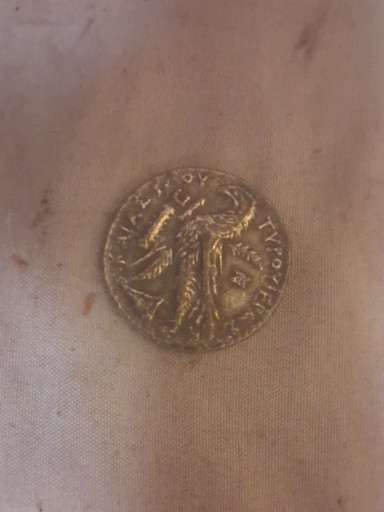
Silver tetradrachm coin from the Seleucid Empire, attributed to Antiochos VII

History
This silver tetradrachm was minted during the reign of Antiochos VII Euergetes (138-129 BC) in the Seleucid Empire, one of the major Hellenistic successor states following Alexander the Great's conquests. The Seleucid Kingdom controlled vast territories across the Near East, and their coinage reflected Greek artistic traditions combined with local influences. These tetradrachms were struck at major mints like Antioch and served as the primary currency for large transactions throughout the eastern Mediterranean and Near East. Seleucid tetradrachms are highly prized by ancient coin collectors and numismatists for their historical significance, artistic quality, and connection to the Hellenistic period. These coins appeal to collectors specializing in Greek and Roman provincial coinage, as well as those interested in Biblical-era artifacts, as the Seleucid Empire features prominently in Jewish history during the Maccabean period. The combination of fine silver content, detailed portraiture, and well-preserved examples makes these coins valuable both as historical artifacts and as investment-grade collectibles in the ancient numismatics market.
Origin
Antioch, Syria, Seleucid Empire
Maker
Seleucid Empire under Antiochos VII
Time period
138-129 BC