
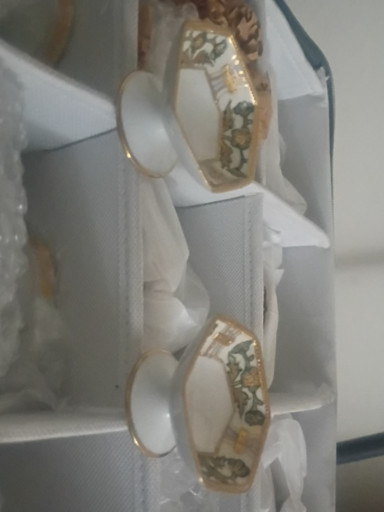
Hand-painted Nippon porcelain trinket or nut dish with gold gilt and floral moriage decoration

History
Nippon porcelain refers to Japanese ceramics produced specifically for export between 1891 and 1921, when items were required to be marked with their country of origin. These hand-painted pieces often featured elaborate gold gilt decoration and raised moriage work, a technique where slip clay was applied to create three-dimensional floral designs. The term 'Nippon' is simply the Japanese word for Japan, and these pieces were primarily exported to Western markets, particularly the United States. Nippon porcelain is highly collectible among antique enthusiasts and porcelain collectors who appreciate the fine craftsmanship, delicate hand-painting, and historical significance of these pieces. Collectors are drawn to the variety of decorative techniques employed, including the intricate moriage work and gold embellishments that showcase the skill of Japanese artisans during the Meiji and Taisho periods. These pieces represent an important era in Japanese export ceramics and are valued for their beauty, artistry, and connection to early 20th-century decorative arts.
Origin
Japan
Time period
1891-1921