
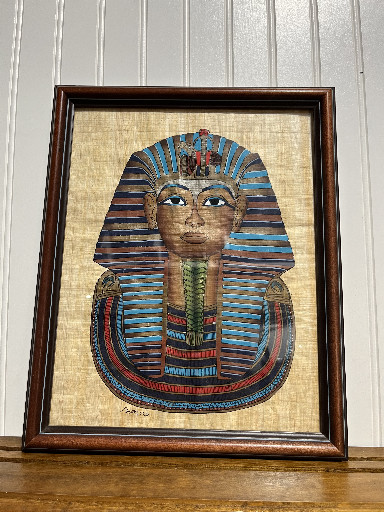
Hand-painted papyrus artwork depicting King Tutankhamun's funerary mask, framed

History
This artwork depicts the iconic golden funerary mask of Tutankhamun, the boy pharaoh who ruled Egypt during the 18th Dynasty (circa 1332–1323 BCE). The original mask, discovered in 1922 by Howard Carter in the Valley of the Kings, is one of the most recognizable symbols of ancient Egyptian civilization. Papyrus paintings like this have been produced in Egypt as tourist souvenirs and decorative art since the mid-20th century, using traditional materials and techniques that echo ancient Egyptian artistic methods. Papyrus artworks featuring King Tut are highly popular among collectors of Egyptology memorabilia, history enthusiasts, and those interested in ancient civilizations. These pieces appeal to travelers who have visited Egypt, museum gift shop collectors, and individuals seeking exotic decorative art with historical significance. The vibrant colors and iconic imagery make these artworks attractive conversation pieces that bring a touch of ancient mystery and cultural heritage into modern homes.
Origin
Egypt
Time period
Late 20th to early 21st century