
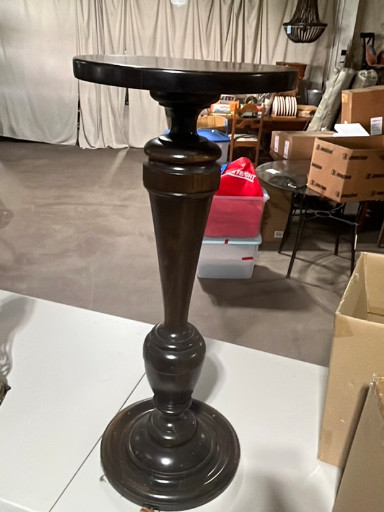
Stained wood neoclassical-style pedestal plant stand

History
Neoclassical-style pedestals became popular in the mid-20th century as decorative furniture pieces, drawing inspiration from classical Greek and Roman architectural elements. These turned wood pedestals typically featured fluted columns, baluster shapes, and circular bases, serving both functional and aesthetic purposes in homes. Such pieces were commonly used to display plants, sculptures, or decorative objects, elevating them to eye level and creating visual interest in interior spaces. These pedestals appeal to collectors of mid-century decorative arts and interior designers seeking classical architectural elements for traditional or eclectic interiors. The timeless design and versatility make them desirable for both residential and commercial settings, particularly among those who appreciate neoclassical aesthetics and functional decorative furniture.
Origin
United States
Time period
Mid 20th century