
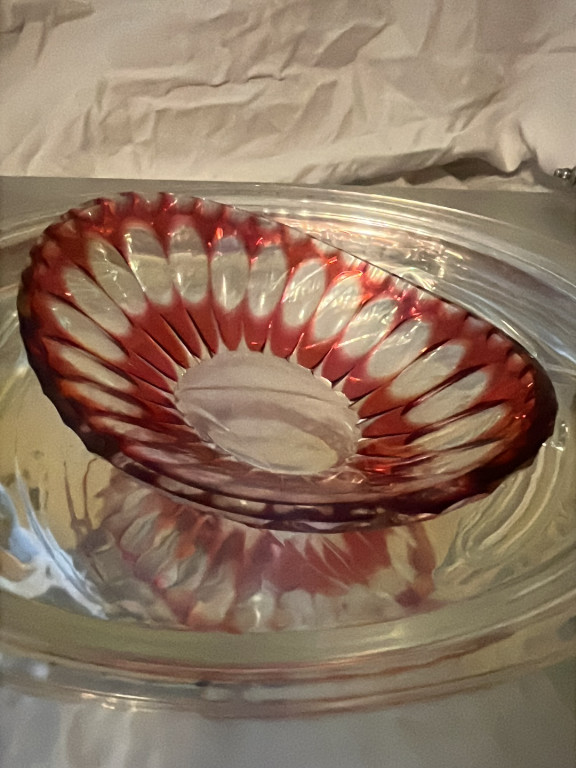
Ruby-flashed cut-to-clear glass bowl with radial swirl pattern
History
Ruby-flashed or cranberry cut-to-clear glassware became popular in the late 19th century and remained fashionable through the mid-20th century. This technique involves applying a thin layer of colored glass (often ruby red) over clear crystal, then cutting through to reveal the clear glass beneath in decorative patterns. American manufacturers like Westmoreland and European glasshouses in Bohemia produced these elegant pieces as decorative tableware and serving dishes. The radial swirl or sunburst pattern seen here was a classic motif that showcased the contrast between the ruby overlay and crystal base. These pieces are highly valued by collectors of vintage glassware and decorative arts enthusiasts who appreciate the craftsmanship of traditional glass-cutting techniques. The ruby-red color and geometric patterns make these bowls particularly desirable for display in collections of American or European pressed and cut glass, and they remain popular among those who collect mid-century decorative tableware for both aesthetic appeal and historical significance.
Origin
United States or Bohemia (Czech Republic)
Time period
Mid 20th century