
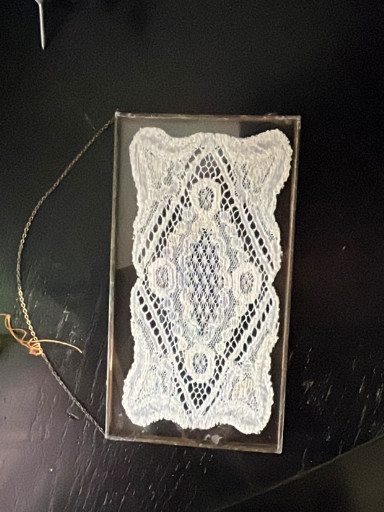
Handmade lace doily or table runner, likely bobbin lace or needle lace

History
This type of delicate lace work emerged in Europe during the Renaissance and flourished through the 19th and early 20th centuries. Bobbin lace and needle lace techniques were highly valued for their intricate patterns and labor-intensive craftsmanship, often created for special occasions, weddings, and as heirloom textiles. These pieces were traditionally made by skilled artisans, primarily women, who spent countless hours creating elaborate geometric and floral designs. Lace doilies and table runners became popular decorative items in Victorian and Edwardian homes, symbolizing refinement and domestic artistry. Such pieces are highly valued by textile collectors, antique lace enthusiasts, and those interested in historical needlework. They appeal to collectors of vintage linens, interior decorators seeking authentic period pieces, and fiber arts historians who appreciate the technical skill and cultural significance of handmade lace. These textiles represent a vanishing art form and are treasured for their beauty, craftsmanship, and connection to domestic history.
Origin
Europe
Time period
Late 19th to Early 20th century