
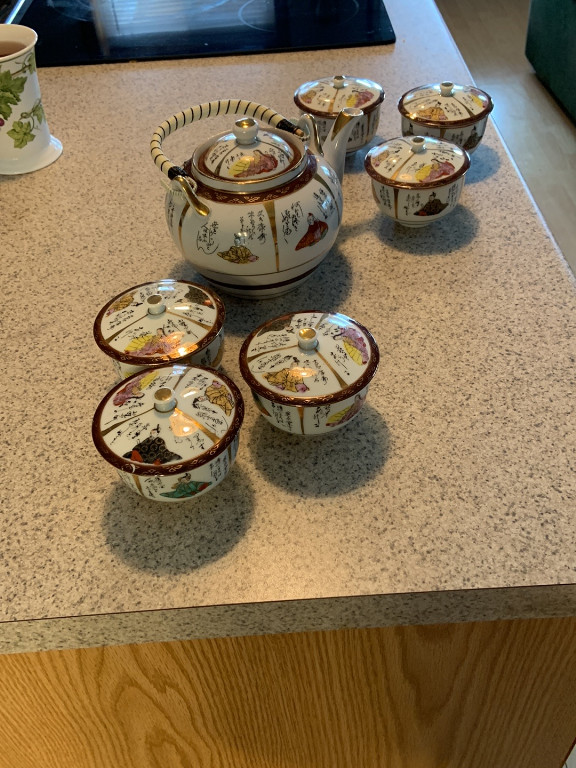
Porcelain tea set with teapot and lidded cups by Kutani

Selling Price
$45
History
Kutani ware originated in the Ishikawa Prefecture of Japan in the mid-17th century, renowned for its vibrant overglaze enamels and intricate hand-painted designs. This style of Japanese porcelain became particularly popular during the Meiji period (1868-1912) and continued through the 20th century, with pieces often featuring traditional motifs such as flowers, birds, and calligraphic inscriptions. These tea sets were crafted both for domestic use and export to Western markets, where Japanese ceramics were highly prized. Kutani tea sets appeal to collectors of Japanese ceramics, Asian art enthusiasts, and those who appreciate traditional tea ceremony culture. The hand-painted details, distinctive color palette of red, green, yellow, and gold, and the functional yet decorative nature of these sets make them desirable for both display and use. Collectors value authentic Kutani pieces for their craftsmanship, historical significance, and the cultural heritage they represent in Japanese ceramic arts.
Origin
Ishikawa Prefecture, Japan
Maker
Kutani
Time period
Mid to Late 20th century