
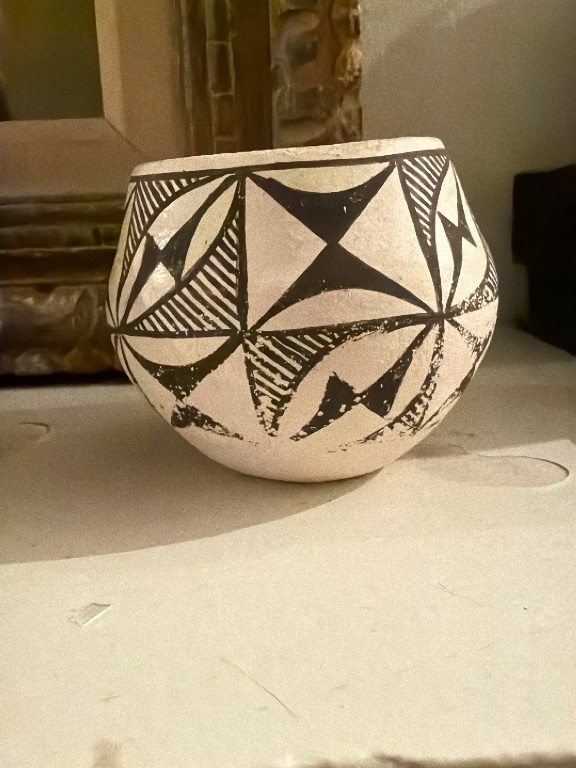
Ceramic pottery jar with geometric black and white designs by Acoma Pueblo artist

History
Acoma Pueblo pottery represents one of the oldest continuously practiced ceramic traditions in North America, with roots extending back over a thousand years in present-day New Mexico. The distinctive thin-walled vessels and intricate geometric designs painted in black on white slip are hallmarks of Acoma craftsmanship, passed down through generations of primarily female artisans. These pots were traditionally used for storage and ceremonial purposes, with each geometric pattern carrying cultural significance within the pueblo community. Pieces from the 1950s represent a particularly important period when Acoma potters were revitalizing traditional techniques while adapting to the growing collector market. Acoma pottery is highly prized by collectors of Native American art, Southwestern decorative arts enthusiasts, and museums worldwide for its technical excellence and cultural authenticity. The thin walls, precise geometric patterns, and traditional hand-coiling techniques demonstrate exceptional skill that appeals to both serious collectors and those drawn to indigenous American craftsmanship. Inherited pieces from the 1950s carry additional value as they represent mid-century Pueblo artistry and often come with family provenance that enhances their collectibility and historical significance.
Origin
Acoma Pueblo, New Mexico, United States
Maker
Acoma Pueblo artist
Time period
circa 1950s