
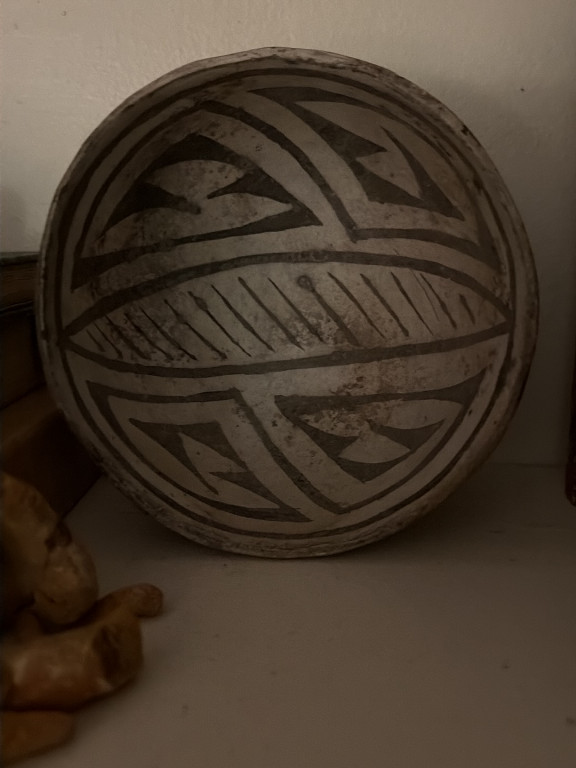
Ceramic bowl with Anasazi Pinedale Black-on-White geometric pottery design

History
This bowl represents the Anasazi (Ancestral Puebloan) ceramic tradition from the American Southwest, specifically the Pinedale style that flourished between approximately 1275–1350 CE. The Pinedale Black-on-White pottery is characterized by bold geometric patterns painted in black mineral pigments on a white slip background, featuring distinctive designs including hatched triangles, stepped patterns, and banded elements that held both aesthetic and symbolic significance within Ancestral Puebloan culture. Anasazi pottery is highly valued by collectors of Native American art, archaeological enthusiasts, and museums for its historical importance and artistic merit. These vessels represent sophisticated ceramic technology and artistic expression from pre-Columbian North America, offering tangible connections to the ancient cultures of the Four Corners region. This particular piece carries exceptional provenance, having been part of the Ernest Jean Long, MD collection acquired in the 1950s through Marian Davidson Antiques on Shattuck Avenue in Berkeley, California. Mid-century collections with documented dealer provenance command premium prices due to their verified authenticity and historical collecting pedigree, as items acquired during this period were often obtained before modern antiquities regulations and represent the golden age of American Southwest artifact collecting.
Origin
Four Corners Region, Southwestern United States
Maker
Ancestral Puebloan (Anasazi) artisan
Time period
circa 1275–1350 CE