
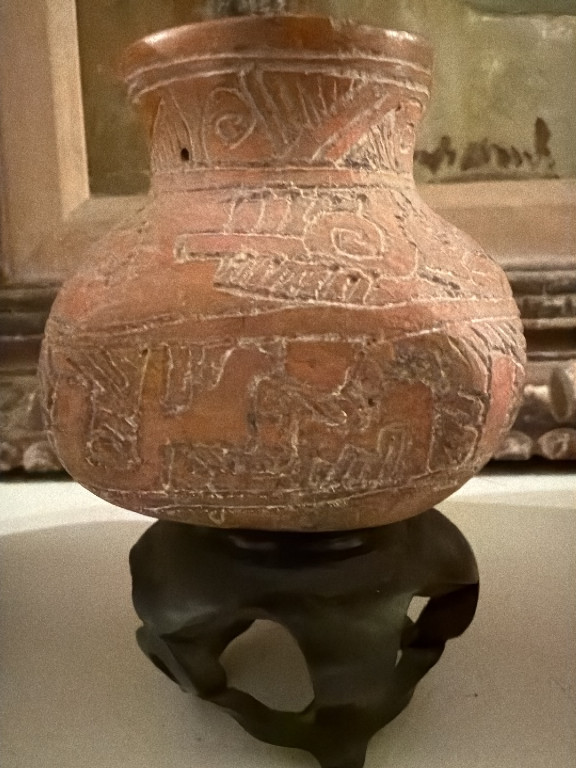
Terracotta pottery vessel with incised zoomorphic and geometric motifs in Pre-Columbian Mesoamerican style

History
This ceramic vessel originates from ancient Mesoamerican cultures, particularly those flourishing between 200–900 CE in regions corresponding to modern-day Mexico and Central America. The incised decorative technique and iconography—featuring stylized animals and geometric patterns—are characteristic of ceremonial or utilitarian pottery from civilizations such as the Maya, Teotihuacan, or cultures from the Mexican highlands. Such vessels were often used for storing liquids, grains, or ceremonial offerings, and their elaborate decoration indicates they held special significance within their communities. The provenance from a 1950s collection adds historical value, as this was a period when significant Pre-Columbian artifacts were legally acquired and collected. Pottery of this style is highly valued by collectors of Pre-Columbian art, archaeologists, and museums for its historical and cultural significance. These artifacts provide insight into the artistic traditions, religious beliefs, and daily life of ancient Mesoamerican peoples. The craftsmanship and iconography make them appealing to enthusiasts of indigenous American art and those interested in the rich cultural heritage of early civilizations. Collectors particularly value pieces with documented provenance from established collections, as this enhances authenticity and historical importance.
Origin
Mesoamerica (Mexico or Central America)
Time period
circa 200–900 CE