
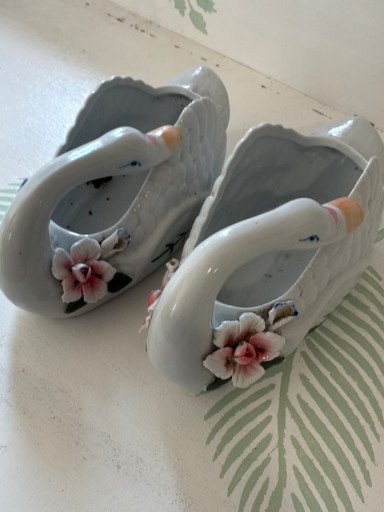
Porcelain swan figurines with applied floral decoration

History
Decorative porcelain swan figurines became popular in the mid-20th century, particularly during the 1950s-1970s, as part of the broader trend for ornamental ceramics in home decor. These pieces were often produced in Japan, Italy, and other European countries, featuring delicate hand-applied floral details that showcased the craftsmanship of the era. Swan figurines held symbolic meaning representing grace, beauty, and elegance, making them desirable decorative objects for mantels, shelves, and display cabinets. These charming pieces appeal to collectors of vintage ceramics, mid-century decorative arts enthusiasts, and those who appreciate nostalgic home decor. The combination of the graceful swan form with delicate applied roses creates an aesthetically pleasing object that fits well with cottage core, shabby chic, and vintage interior design styles. Such figurines are valued by collectors of decorative porcelain for their craftsmanship, nostalgic appeal, and the gentle elegance they bring to any space.
Origin
Japan or Europe
Time period
Mid 20th century