
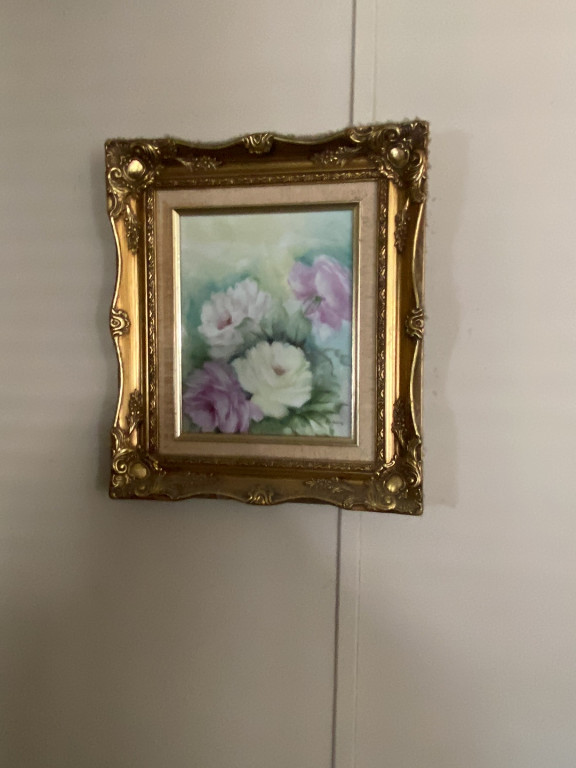
Hand-painted porcelain plaque depicting roses in an ornate gilded frame

History
Hand-painted porcelain plaques became popular decorative items during the late 19th and early 20th centuries, particularly in Europe and America. These pieces were often created by skilled artisans who specialized in floral still life compositions, with roses being among the most favored subjects due to their romantic symbolism and aesthetic appeal. The ornate gilded frame with rococo-style embellishments was typical of the Victorian and Edwardian eras, designed to enhance the delicate beauty of the painted porcelain. These plaques were frequently displayed in parlors and drawing rooms as symbols of refined taste and artistic appreciation. Hand-painted porcelain plaques are highly valued by collectors of Victorian decorative arts, antique porcelain enthusiasts, and lovers of floral still life paintings. The combination of skilled hand-painting techniques, the luminous quality of porcelain as a painting surface, and the elaborate period framing makes these pieces particularly appealing to those who appreciate traditional craftsmanship and romantic home decor. Such items are sought after for their historical significance, artistic merit, and their ability to add elegance and vintage charm to interior spaces.
Origin
United States or Europe
Time period
Late 19th to early 20th century