
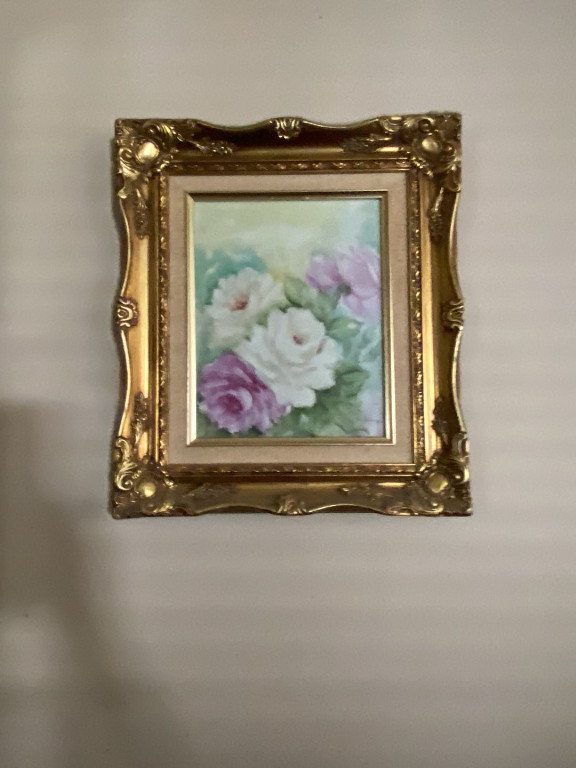
Hand-painted porcelain plaque depicting white and lavender roses in ornate gilt frame

History
Hand-painted porcelain plaques became popular decorative art pieces in the late 19th and early 20th centuries, particularly in Europe and America. Artists would paint delicate floral compositions, especially roses, onto fine porcelain tiles or plaques, which were then framed as wall art. These pieces represented the Victorian and Edwardian era's appreciation for refined domestic decoration and the skill of china painting, which was often practiced by talented amateur and professional artists alike. The ornate gilt frames typical of this period enhanced the luxurious appearance of these decorative objects. Porcelain plaques featuring floral still life compositions appeal strongly to collectors of Victorian and early 20th-century decorative arts, antique china painting enthusiasts, and those who appreciate traditional home decor. These pieces are valued for their delicate artistry, the skill required to paint on porcelain, and their ability to add elegance to interior spaces. Collectors of hand-painted porcelain and lovers of botanical art particularly seek out well-executed examples with vibrant colors and fine detail, as they represent both artistic merit and the domestic crafts tradition of the era.
Origin
United States or Europe
Time period
Late 19th to Early 20th century