
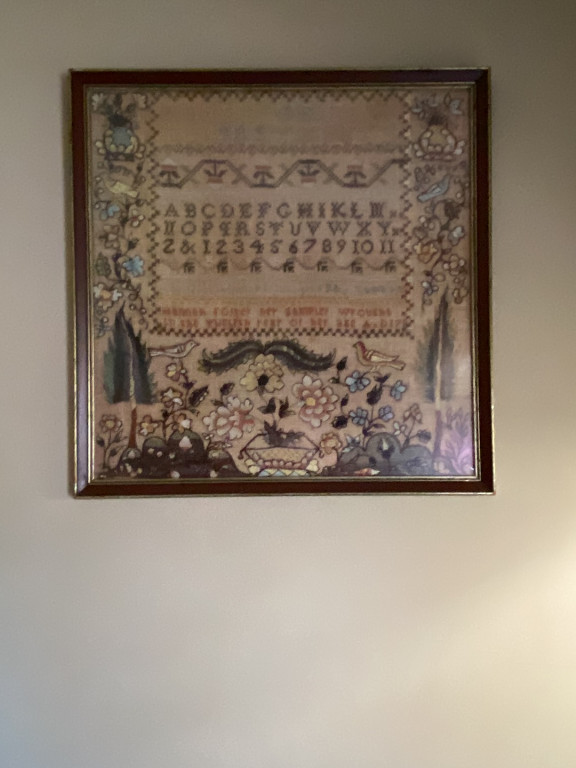
Textile needlework sampler, likely a reproduction of an early 19th-century American sampler

History
Needlework samplers were educational tools created primarily by young girls in the 18th and 19th centuries to practice embroidery stitches, alphabets, numerals, and decorative motifs. These pieces served both as learning exercises and as demonstrations of skill, often featuring the maker's name, age, and date of completion. American samplers from this period typically included alphabets, biblical verses, floral borders, and symbolic imagery such as trees, birds, and houses. This particular design appears to reference the style of early American samplers, which were treasured family heirlooms and displayed prominently in homes. Samplers are highly valued by collectors of American folk art, textile historians, and enthusiasts of early American decorative arts. They represent an important aspect of women's history and domestic education, offering insights into the social and cultural practices of the period. Original antique samplers in good condition command significant prices at auction, particularly those with documented provenance, unusual designs, or historical significance.
Origin
United States
Time period
Early 19th century style