
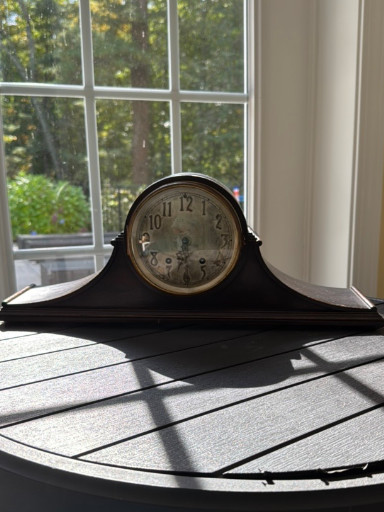
Wood tambour-style mantel clock with Westminster chime movement

History
Tambour mantel clocks became popular in American homes during the early to mid-20th century, particularly from the 1920s through the 1950s. These clocks were named for their distinctive camelback or Napoleon hat-shaped cases, which were typically crafted from mahogany, walnut, or oak. They often featured mechanical movements with Westminster chime mechanisms that struck on the quarter-hour, adding both functionality and elegance to living rooms and mantels across America. Tambour mantel clocks appeal to collectors of vintage timepieces, antique furniture enthusiasts, and those who appreciate traditional home décor. These clocks are valued for their craftsmanship, melodious chimes, and nostalgic connection to mid-century American domestic life. Collectors particularly seek examples with original movements in working condition, as they represent an era when mechanical clockmaking was at its peak before the advent of quartz technology.
Origin
United States
Time period
circa 1930–1950