
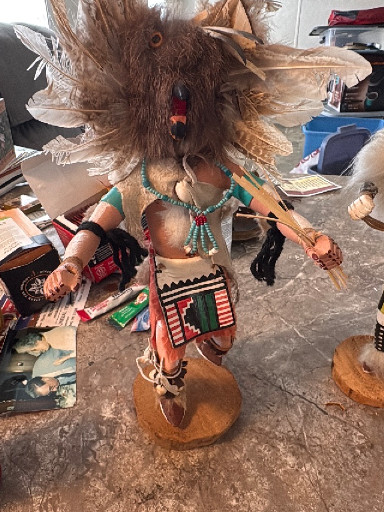
Carved wood Navajo Owl Kachina doll with feather headdress and traditional regalia

History
Kachina dolls are traditional carved figures created by Hopi and Pueblo peoples of the American Southwest, representing spiritual beings central to their religious ceremonies. While this example is identified as Navajo-made, authentic kachinas are primarily a Hopi tradition, though neighboring tribes have adopted the art form for commercial purposes since the late 19th century. These dolls were originally created as teaching tools for children to learn about the various kachina spirits, but evolved into collectible art pieces for the broader market during the 20th century. Kachina dolls appeal to collectors of Native American art, Southwest Americana enthusiasts, and those interested in indigenous spiritual traditions and folk art. The Owl Kachina specifically represents wisdom and night vision in Native cosmology, making it particularly sought after by collectors who appreciate the symbolic and cultural significance of these handcrafted pieces. Such dolls are valued for their craftsmanship, cultural authenticity, and connection to living Native American artistic traditions.
Origin
Southwestern United States
Time period
Late 20th to early 21st century