
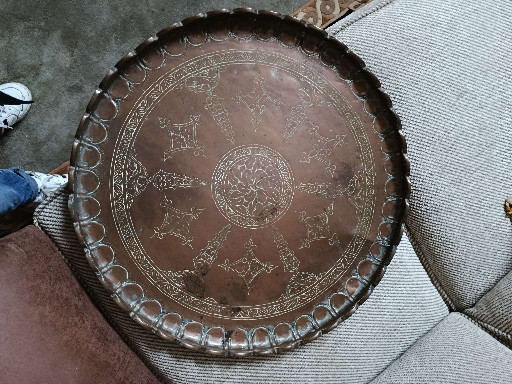
Tinned copper tray with engraved decoration from Middle Eastern or Persian origin

History
This type of tinned copper tray originates from the Middle East, particularly Persia (modern-day Iran), Syria, or Turkey, and dates from the late 19th to early 20th century. These trays were hand-crafted using traditional metalworking techniques, with intricate engraved designs featuring geometric patterns, calligraphy, and sometimes figural scenes. The tinning process protected the copper surface and created a silvery appearance. Such trays served both functional and decorative purposes in wealthy households, often used for serving tea or displayed as status symbols. The scalloped edge and concentric decorative bands are characteristic of Qajar-era Persian metalwork. These trays are highly valued by collectors of Islamic art, Middle Eastern antiques, and decorative metalwork enthusiasts. They appeal to interior designers seeking authentic period pieces and to cultural historians interested in traditional craftsmanship. The combination of skilled hand-engraving, historical significance, and aesthetic beauty makes these trays desirable for both display and investment. Museums and private collectors particularly prize examples with clear provenance and well-preserved tinning.
Origin
Middle East (Persia, Syria, or Turkey)
Time period
Late 19th to early 20th century