
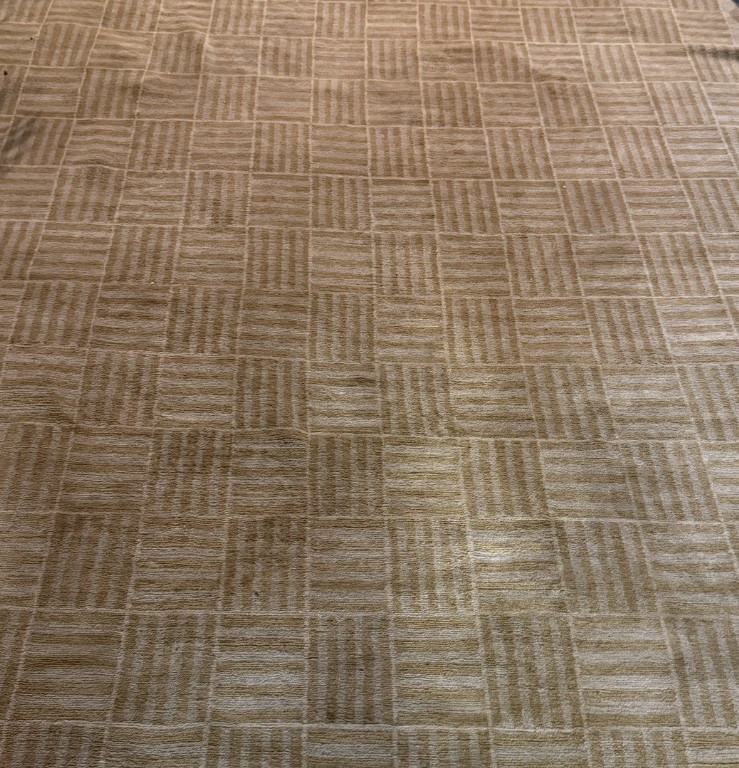
Tibetan hand-knotted wool area rug with geometric basketweave pattern
History
Tibetan rugs have been woven for over a thousand years, originating in the high plateaus of Tibet where wool from highland sheep provided the primary material. Traditional Tibetan weaving techniques were brought to Nepal and India by Tibetan refugees in the 1960s, where the craft continues to thrive today. These rugs are created using a distinctive hand-knotting method that produces dense, durable pile with exceptional longevity. The geometric basketweave pattern shown here reflects contemporary design sensibilities while honoring traditional weaving methods. Tibetan rugs are highly prized by collectors, interior designers, and homeowners who appreciate handcrafted textiles and sustainable artisan practices. The neutral color palette and geometric design make these rugs versatile additions to both modern and traditional interiors, while the hand-knotted construction ensures each piece is unique. These rugs represent a living tradition that supports artisan communities while providing exceptional quality floor coverings.
Origin
Tibet, Nepal, or India
Time period
Contemporary (2000s–2020s)