
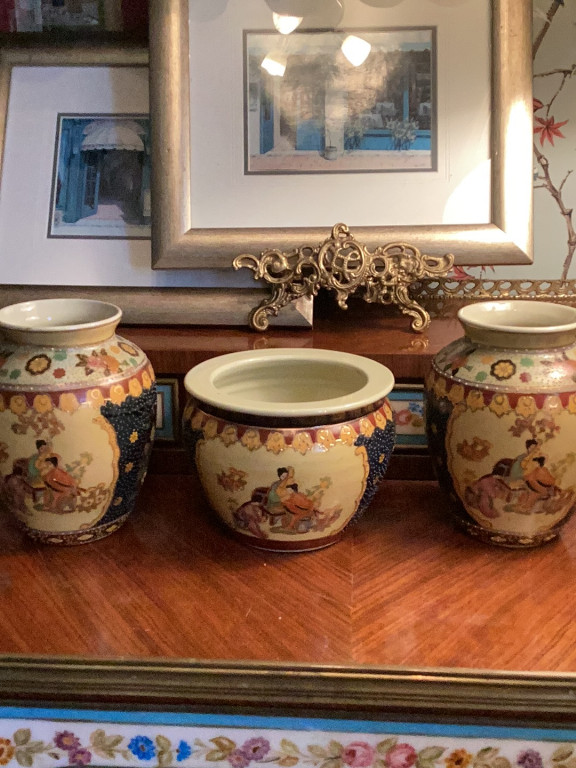
Set of three ceramic jardinieres in Satsuma style with hand-painted geisha and floral motifs
History
These jardinieres represent the Satsuma style of Japanese ceramics, which became highly popular in the West during the late 19th and early 20th centuries. Satsuma ware originated in the Kagoshima Prefecture of Japan and was characterized by its cream-colored crackle-glazed pottery decorated with intricate hand-painted designs featuring figures, florals, and lavish gold detailing. The style reached its peak during the Meiji period when Japan opened to international trade and these decorative pieces were exported extensively to Europe and America. These jardinieres appeal to collectors of Asian decorative arts, particularly those interested in Japanese export porcelain and Orientalist design. The hand-painted geisha figures and elaborate floral borders make them attractive to enthusiasts of traditional Japanese art and culture. Such pieces are valued by interior designers and collectors who appreciate the craftsmanship of hand-painted ceramics and the historical significance of East-West cultural exchange during the Meiji and Taisho periods. The matching set of three increases their collectible value and decorative impact.
Origin
Japan
Maker
Satsuma-style pottery (specific maker unmarked)
Time period
Early to Mid 20th century