
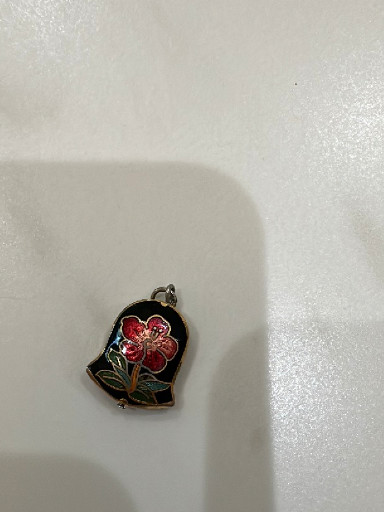
Cloisonné enamel pendant featuring red flowers

Selling Price
$15
History
Cloisonné is an ancient enameling technique that originated in the Near East and was perfected in China during the Ming Dynasty (1368–1644). The process involves soldering thin metal wires onto a metal base to create compartments (cloisons), which are then filled with colored enamel paste and fired at high temperatures. This particular pendant represents the folk art tradition of cloisonné work, likely produced in the mid to late 20th century when such decorative items became popular as costume jewelry and collectible charms. Cloisonné pendants like this appeal to collectors of vintage costume jewelry, enamel work enthusiasts, and those interested in traditional Chinese decorative arts. The vibrant colors, intricate wirework, and three-dimensional puffy form make these pieces desirable as wearable art and collectible charms. Such items are valued by jewelry collectors for their craftsmanship, nostalgic appeal, and the skill required to produce the delicate enamel work.
Origin
China
Time period
Mid to Late 20th century